
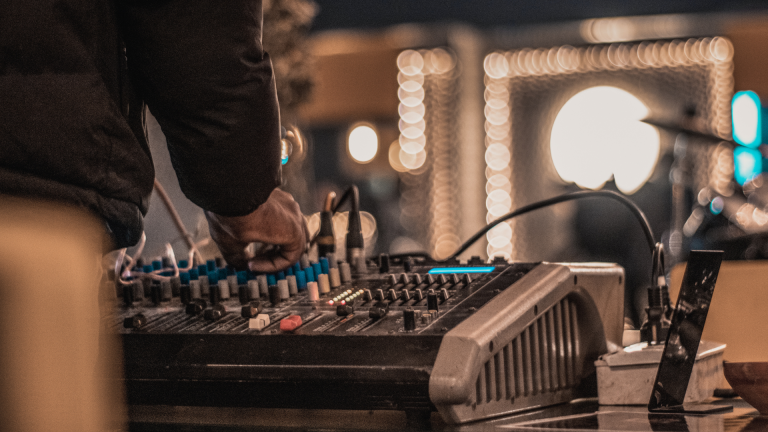
Here’s a pattern we’ve observed across hundreds of Lagos events: you can predict how an event’s audio will go by watching the hour before doors open.
If that hour contains a structured, unhurried sound check, the event will almost certainly be smooth. If it contains people plugging things in while guests queue outside, the evening will contain at least one moment of feedback, one dead mic, and one “is this thing on?” – guaranteed.
The difference isn’t luck or even gear quality. It’s routine. Here’s the exact one professional crews run – use it for your own events, or use it to judge whether the crew you’ve hired knows their job.
First, understand: line check ≠ sound check
Amateurs treat these as one step. Professionals split them.
Line check answers: does every connection work? Each mic, each cable, each input reaches the mixing desk and makes sound.
Sound check answers: does everything sound right in this room at performance levels? You can pass line check and completely fail sound check – everything connected, everything terrible.
Step 1: Power up in order (10 minutes)
There’s a sequence: sources and desk first, amplifiers and powered speakers last. Power amps first and every connection thump destroys tweeters and nerves. (Reverse it at teardown: amps off first.)
While things boot, the engineer confirms clean power – in Lagos this means knowing which generator is feeding AV and whether catering’s warmers share the line.
A hum that appears at 6pm when the kitchen fires up is a power-distribution problem you could have caught at 2pm. (We covered the vendor-side questions on power in 10 questions to ask before renting sound gear.)
Step 2: Line check everything (15–20 minutes)
One input at a time, methodically: podium mic, “check one two”, confirmed at the desk. Handheld one. Handheld two. Each lapel. The playback laptop (play an actual file, not just a connection icon). The DJ’s feed. The band’s channels if there’s a band.
Every wireless mic gets walked around the stage area while talking – wireless that works standing still can drop in the dead spot stage-left, and you want to find that spot now, not during the keynote.
Fresh batteries in everything at this point, not “batteries that should be fine.” The entire discipline of preventing audio dropouts starts at this step.
Step 3: Set real levels with real voices (15 minutes)
Now sound check proper. The MC speaks at MC volume – not a shy “testing” but the actual projected voice they’ll use. Levels and EQ get set per voice.
The engineer pushes each mic toward feedback deliberately to find the danger threshold, then backs off – finding the howl point now means never finding it during speeches.
If there’s a band or DJ, they play at performance level. This is the step that venues and neighbours complain about, and it cannot be skipped or done quietly – a system checked at polite volume is unchecked. We can’t count how many events we’ve seen suffer because of this.
Step 4: Walk the room (10 minutes)
The desk position lies. Every room has hot spots, dead zones, and that one table where the speech will sound like mud. The engineer (or you) walks the entire guest area while audio plays – back corners, behind pillars, the high table, near the doors.
Lagos event halls, with their glass walls and marble floors, are full of acoustic surprises; the walk finds them while there’s still time to angle a speaker or add a fill. A perfectly tuned desk position with a terrible back row is a failed sound check.
Step 5: Roll-call the comms (5 minutes)
For any event with a production crew, the comms headsets get checked like everything else: every beltpack on, every position answering a roll call, wireless packs walked to their working areas, spare batteries staged. Five minutes – and it’s the five minutes that makes every later cue land, as we detailed in how pro crews talk on headsets.
Step 6: Run the critical moments (10 minutes)
The final professional touch: don’t just check inputs – rehearse transitions. Play the entrance song and practice the fade. Open the podium mic as if speeches are starting.
Run the video with sound that the CEO is presenting. Switch from DJ to MC and back. Transitions are where events actually stumble; sixty seconds rehearsing each one buys you a seamless evening. (This is the heart of the corporate AV run-through too.)
Then: system to standby, walk-in playlist ready, and the crew eats before doors. A fed crew at standby is the most underrated production asset in Lagos. We stand by this completely.
The math of the hour
Total: roughly 60–70 minutes. The objection is always venue access – “we only have the hall from 3pm.” Understood, and it’s exactly why this needs scheduling, not hoping: agree the access window with your venue and your AV team in advance so the routine fits before doors. An event that skips sound check doesn’t save an hour; it redistributes that hour into the evening as interruptions, with 500 witnesses. The true cost of poor communication and preparation is always paid eventually – sound check just lets you pay it cheaply, in private.
Want your next event to pass the hour-before-doors test? Our crews run this exact routine on every job – sound, comms, and visuals checked and rehearsed before your first guest arrives. Message 527 Sounds on WhatsApp with your event date and venue.