Audio podcasts build listeners. Video podcasts build audiences. It’s why every serious new show in Lagos launches with video, and why so many audio-only shows are scrambling to add it.
But video multiplies your equipment questions. Beyond the audio chain, you now need cameras, lighting, and a plan for making it all look intentional.
We’ve set up video podcast sessions from Lekki to Ikeja, and the same mistakes keep coming up. Here’s the practical guide.
Start with an uncomfortable truth: lighting beats cameras
Everyone asks about cameras first. Wrong order.
A mid-range camera, with good lighting, looks professional. A flagship cinema camera under your sitting-room ceiling bulb looks like CCTV. Light is what cameras record; give them good light, and even modest sensors shine.
For podcasts, the formula is soft and even: a key light (a softbox or panel at roughly 45° to each face), gentle fill so shadows aren’t harsh, and ideally a subtle back light to separate people from the background. Soft, diffused sources are forgiving on every skin tone and stop that harsh “interrogation” look. If you fix only one thing about your video setup, fix this.
A Lagos-specific note: mixed light is the silent killer. Daylight through a window is blue-ish; your bulbs are orange-ish; together they make skin look strange in a way that’s painful to correct later. Pick one – block the window and use your lights, or commit to window light and switch the bulbs off.
Cameras: how many and what kind
The standard video podcast grammar is simple: one wide shot holding everyone, plus one camera per speaker for the close-ups your edit will live on. Two hosts = three cameras is ideal; two cameras (wide + one roving close-up angle) is a workable minimum that still gives your editor choices.
What kind? Mirrorless cameras (Sony, Canon, Fujifilm class) are the sweet spot – clean image, interchangeable lenses for that blurred-background look, reliable for long recordings. The catch nobody mentions: many photo-first cameras have recording limits or overheat during a 90-minute session, so podcast use needs the right models and settings. This is exactly the kind of detail that makes renting a matched, tested kit less stressful than assembling your own for the first time.
Whatever you choose, match your cameras. Two identical cameras cut together seamlessly; two different brands mean every cut is a slightly different colour of reality, and you’ll spend hours grading.
The set: what’s behind you matters
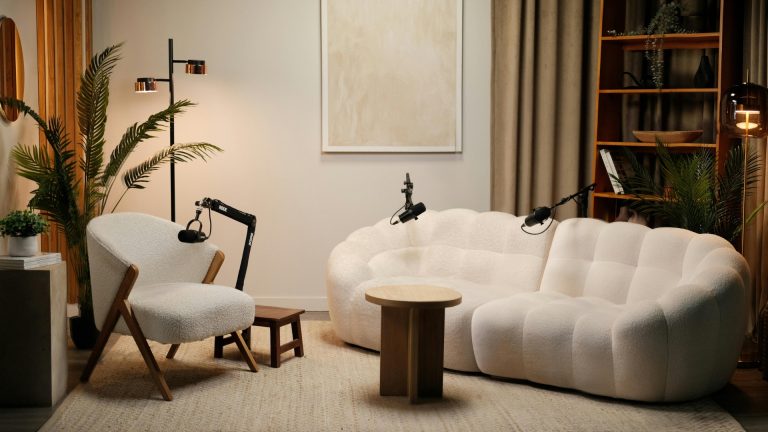
Your background is part of your brand. The good news is that Lagos apartments and offices convert beautifully with small moves: pull subjects away from the wall (a metre or more) for depth, add one or two practical lights in the background – a warm lamp, an LED strip – and keep the frame intentionally simple. Plants, shelves, and texture beat bare wall; clutter beats nothing but reads as chaos.
Frame at eye level, faces on the rule-of-thirds lines, looking slightly across frame toward each other. That alone puts you ahead of most shows.
Audio still rules
Here’s the paradox of video podcasting: viewers will forgive soft focus, but they close the tab over bad audio. Your audio chain – broadcast mics on boom arms, a proper console, headphones for monitoring – stays exactly as important as before. If you’re new to that side, start with the equipment checklist and the interface vs mixer guide.
One video-specific addition: record audio separately from the cameras (on the console or a recorder), and clap once at the start for sync. In-camera mics are for reference only. And keep mics in frame without shame – visible broadcast mics are part of the podcast aesthetic now; bad hidden audio is not. The room still matters too: a beautiful set in an echoey room sounds like a bathroom, so apply the acoustic treatment hacks before recording day.
Power, storage, and the Lagos factor
A three-camera video session eats batteries and SD cards. The checklist that saves shoots: dummy batteries or AC power for cameras where possible, charged spares for everything else, more storage than you think (4K is hungry), and an inverter or power station so a NEPA flicker doesn’t end the session. We’ve lost sessions to this before – don’t let it happen to you. If you’re shooting outside your own space, our on-location recording guide covers the travelling version of all this.
Rent the whole stack first
A proper video podcast setup – three cameras, lenses, lights, stands, plus the full audio chain – is a serious purchase. Millions of naira, easily, before you’ve published episode one.
Renting flips that equation. The complete, matched kit shows up at your location with a technician who sets the lights, frames the cameras, checks audio, and presses record with you. You produce broadcast-quality episodes immediately, learn what you actually use, and only buy gear once your show has proven it deserves the investment. It’s the same logic as renting podcast gear before building a studio, with even higher stakes because video gear costs more and dates faster.
For the full beginner-to-publish journey – platforms, formats, workflow – our guide on how to start a high-quality video podcast in Lagos picks up where this one ends.
Want your show looking like the big leagues from episode one? Tell us your format and location, and we’ll spec the camera, light, and audio package with current prices. Message 527 Sounds on WhatsApp.