
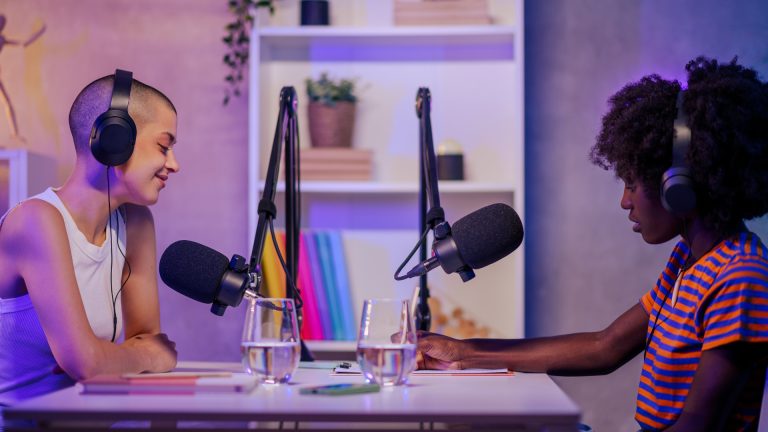
You’ve got the idea, the co-host, maybe even the name and the logo. Now you’re staring at the gear list and the prices, and doing that math Lagos creators know too well: one SM7B is how much?! And I need four?
This is exactly where podcast equipment rental comes in. We’ve helped creators at every level, first-timers recording episode one, media houses doing weekly productions, and the value of renting over buying is never more obvious than at the beginning.
This post covers what renting costs in Lagos actually are, what should be included, and how to decide between renting gear and booking studio time.
The two ways to rent
Option 1: Rent the kit. We deliver a complete podcast setup – microphones, console or interface, headphones, boom arms, cables, and optionally cameras and lights – to your location. Your office boardroom, your sitting room, a hotel suite, anywhere. A technician sets it up, checks levels, and either stays or leaves you to it.
Option 2: Book a ready studio. You show up, sit down, record, and leave with your files. Zero setup, zero gear thinking.
Kit rental suits creators who want their own space and aesthetic on camera, record on flexible schedules, or are producing somewhere specific – like recording on location around Lagos. Studio sessions suit people who want maximum convenience per episode.
What kit rental costs (and why)
Podcast rental in Lagos is typically priced per session or per day, as a package rather than per cable. The package price moves with four things:
How many people on mic. A solo setup is one mic, one interface channel, one pair of headphones. A four-person panel means four broadcast mics, a multi-channel console, four headphone feeds – roughly triple the equipment. This is the single biggest price factor.
Audio-only or video. Adding cameras and lights adds meaningful cost – quality cameras and lighting are expensive gear. A two-camera video setup typically adds more to the package than the entire audio kit. (What that buys you is covered in our video podcast setup guide.)
Gear tier. There’s a sensible mid-tier (Rode/Audio-Technica class mics, solid interface) that’s right for 90% of shows, and a premium tier (SM7Bs, Rodecaster Pro, cinema-line cameras) for branded content and shows with sponsors. Be honest about which you need – premium gear won’t fix an unrehearsed show, and mid-tier gear properly set up sounds excellent.
Operator or self-serve. Adding a sound technician who monitors the session costs more, and for your first few episodes it’s the best money you’ll spend – they catch the problems you don’t know exist yet, the ones from our gear mistakes list.
Because rates change with the market, we keep current package prices on WhatsApp rather than letting a blog post go stale – message us with “podcast kit” plus your format, and you’ll get the live price list.
What should always be included
A proper podcast rental package includes everything needed to record, not just the headline items: all cables and stands, headphones for every guest, an SD card or the option to record onto your laptop, fresh batteries where relevant, delivery within Lagos, setup, and a test recording before the session starts.
If a quote lists a mic price and everything else is “extra,” keep scrolling – assembling a kit from à-la-carte line items almost always costs more and fails more. The same vetting logic from our questions to ask before renting sound equipment applies here.
Rental vs buying: the break-even math
Quick honest arithmetic. A quality four-person video podcast setup costs millions of naira to buy outright. Renting that same setup costs a small fraction per session.
If you record weekly and you’re certain your show will run for years, buying eventually wins – eventually. But most new podcasts don’t fail because of gear; they fail because the format wasn’t tested. Podfade is real: a large share of shows stop before episode ten.
Renting for your first season converts a huge upfront bet into a small per-episode cost while you find out if the show works. We made the full case for why you should rent podcast gear before building a studio.
There’s a hidden bonus too: renting lets you try gear tiers. Record one episode on the mid-tier kit and one on the premium kit, listen back, and discover whether the difference matters for your show before anyone spends millions.
A realistic example
A two-host interview show recording in an Ikoyi office, video, two episodes back-to-back per session (smart – one setup, two episodes): three mics, podcast console, three headphone feeds, two cameras, two lights, technician for the session.
Split across two episodes, the per-episode cost lands somewhere around what the hosts would spend on a nice team lunch – for broadcast-quality output. That’s the trade o.
Before you book, know your list
If you’re not sure what your format needs, start with our complete podcast equipment checklist for Lagos creators – it walks through every component in priority order. Then booking is one message.
Get the current price list: chat with 527 Sounds on WhatsApp – tell us how many people on mic, video or audio-only, and your location, and we’ll send packages and available dates the same day.